Posted by: Deb | October 2, 2009

Earth Changes Updates

Grandmother Parisha will be on conference call this evening at 9 pm EST to discuss recent developments regarding the earth changes prophesied for this time with particular attention to 2012.

Listen in at

646-519-5860, pin no. 2930

Please mute your phone once you are “in” out of courtesy for all the participants.

More information:

www.parishaonline.com

©2009 Deborah Adler. All rights reserved

Posted by: Deb | September 8, 2008

Sobriety and Politics

I don’t know. It seems like maybe the topic of sobriety, freedom from addictions, has lost its luster. Not too many people come searching for addictions recovery these days – or do they?

Where do you supposed they’re looking? In the 12-Step Programs? Good start.

In the “You don’t need anybody to get sober” alternatives to 12-Step Programs? (Speaking as one who has maintained nearly 29 years of continuous sobriety enjoying the fellowship of 12-Step communities, I can dismiss this as reactionary crap. Remember “no man/woman is an island?”)

Where else might people be looking for addictions recovery? The Church? Social Service agencies? TV? You-Tube? (You’re geting colder…..)

Well, okay, so maybe there might be some good things on YouTube…:-}

But seriously, one thing that I find totally refreshing about the 12-Step meetings is that wonderful code of conduct for the group collective, The 12 Traditions.

In this Election Year Frenzy, I especially appreciate the 10th Tradition, “A.A., as such, has no opinion on outside issues; hence the A.A. name ought never be drawn into public controversy.”

Actually, that’s the short form. The “long form” which was the originaly language of the Founders states:

“No A.A. group or member should ever, in such a way as to implicate A.A., express any opinion on outside controversial issues—particularly those of politics, alcohol reform, or sectarian religion. The Alcoholics Anonymous groups oppose no one. Concerning such matters they can express no views whatever.”

Now, consider that the Traditions were written in order to help members of Alcholics Anonymous focus on their primary purpose, “to carry its message to the alcoholic who still suffers.”

The topic of politics does tend to surface in 12-Step discussion meetings around election time. One fellow introduced a topic the other day asking how to deal with all the opinionated people surrounding him outside of the meetings.

The consensus was to practice “Live and Let Live” and not try to enter into a debate with anyone.

To the uninitiated, that might sound a bit “sissy.” But to the experienced, it is a true piece of wisdom.

See, the problem for this gentleman wasn’t that he was afraid to discuss politics, or hear others’ opinions. The problem was that those who held opinions contrary to his so infuriated him that he worked himself into a real rage over it. That’s a danger zone for an alcoholic/addict. (It’s a danger zone for anyone, if they’re prone to act out that rage in a way that leads to harm of ones’ self, or another).

Most alcoholics think like this: “You pissed me off. I’ll show you. I’ll go hurt me.” Well, isn’t that what they’re doing when they get angry and go off and get drunk?

So the danger, then, lies in engaging in behaviours that place the recovered alcoholic/addict back into old habits and patterns that can lead to a spontaneous breaking of sobriety – “going back out” as we say.

The danger of talking politics or any other controversial subject inside of a 12-Step meeting is that the focus of the meeting gets lost in a more trivial superficial issue, rather than staying with the “primary purpose” or “prime directive,” if you will, of helping other alcoholics to stay sober.

I choose my arenas carefully. I respect the Traditions inside the rooms of recovery, and I use them as guidelines for conduct with other outside of the rooms.

I blog. So I can vent my political opinions via the world wide web! And I have the “power” to approve those comments that agree with my opinions and delete those who do not. :-)

I generally avoid talking politics with my family, because it leads to discord. We like harmony at home. Talking politics does not breed harmony!

I generally listen to others while they’re expressing their views, then politely smile and say “uh-huh.” Thus they feel a) listened to, and b) validated. I never say “I agree” with them if I don’t, nor most often do I say so even if I do.

I just give them audience and then exit the conversation. I Let Go of the need to control others.

So far it’s worked. I’m still sober! (And there’s alot this time around that I could get pretty angry about. But I just can’t afford that luxury). Now, it isn’t that I don’t care. I have a definite belief in what’s best for my country, and I will exercize my right to express that belief in the voting booth.

But argue it on the streets? Not today. Just for today I’m going to let go of the conviction that my opinion is more important than anyone else’s and that I have to pursuade everyone to my way of thinking or all is lost. Because, as long as I have my sobriety, I can cope with whatever goes on around me. If I relinquish my sobriety, then I have nothing.  -Deb Adler

©2008 Deborah Adler. All rights reserved.

Bookmark and Share

Posted by: Deb | August 25, 2008

Craig Ferguson Monolgue About Recovery

Late-night TV Show Host Craig Ferguson shares his past problems as an alcoholic after celebrating his 15th Anniversary Sober. Great stories and insights. Congratulations, Craig, on the courage to share your story before an audience of millions, and kudos for telling it with humor!


Bookmark and Share

Posted by: Deb | August 17, 2008

Self-Healing Our Addicted Being


This author has on more than one occasion had personal experience in applying the principles and ideas set forth in The Biochemicals of Emotions (see previous posts in 3 parts) through the process of “self-healing.” 


I recently came across a collection of drawings, which I used to assist with clearing the congestion in my upper respiratory system from years of allergies (aggravated from smoking).  The drawings had affirmations on them and crude pictures (I’m not an artist) of lungs and outlines of the upper chest with symbols to represent clear passageways; there were cells drawn with heart-shaped nuclei with accompanying words of self acceptance and self love. And perfection in Creator.


I was successful in getting free of medications and injections, which I had been saddled with for over 11 years! The images I held of my body in perfect health I know contributed to that transformation.  I had a similar experience in healing my body from needed supplemental thyroid medication several years after a partial thyroidectomy.


Ten years ago I experienced a severe knee injury.  I had studied the Medicine Path and worked with my Elder/Mentor, Grandmother Pa’Ris’Ha, in Spiritual Awareness for over ten years at that time.  When I came to her with my injury, Grandmother shared with me that the Alters had created circumstances to provide me an opportunity to come into right relationship with what I had been given as a Medicine Carrier and healer to help others, and yet had done nothing with. Through this injury I was forced to face my own weakness and disbelief and use the medicine I had learned to help myself.  Through this process and journey, I learned how to assist others.


The doctor insisted that arthroscopy was mandatory, yet at the same time he was somewhat intrigued by the beginnings of recovery that even he was willing to admit to by the time he saw me three weeks following the initial occurrence. I explained to him some of my experiences in working with a holistic approach to health and healing.  He was willing to give me some time to see if I could recover on my own, but still insisted that surgery would be required if I hadn’t made “satisfactory” progress by 6 months. He told me that because of my advancing age (44 years!) I was in danger of being permanently disabled.


I took a picture of a perfect knee from my anatomy book and made several copies. I kept in convenient locations and carried a copy with me.  Whenever I could, I would pull out that picture and focus on it, at the same time sending that picture to what I had come to identify as “cellular memory” – the body’s innate knowing of itself in the state of perfection. I believe this is the “innate intelligence” that Dr. Pert refers to in her book, Molecules of Emotion.  I spoke to that innate knowing – that intelligence – to work together with body’s natural ability to seek balance and wholeness. 


It took 9 months – and I credit a Tai Chi class for the final restoration of mobility and fluidity in that joint – but I returned to full utilization of my knee and leg and ten years later, at 55, I run and climb and hike and show no signs whatsoever of the traumatic injury that occurred and that was supposed to have been permanently debilitating.


I have been many times blessed by this event in my life, even to this day.  It has helped me to see how vital it is for each of us as Medicine Carriers to use what we have learned -to heal Creator’s children, all the beloved relations, and the Earth Mother herself.  I made a covenant with Creator that as I lift myself up, so shall I lift all others.  That means I agreed to “respond with the ability” (the definition of “responsibility”) to assist others with the application of the teachings I have received. We cannot hoard them. We can only renew them by giving them away.  -Deborah Adler

©2008 Deborah Adler. All rights reserved. 
Bookmark and Share 


Posted by: Deb | August 17, 2008

The Biochemicals of Emotions, Part 3 (Conclusion)

THIS IS THE FINAL PART OF A CONTINUATION OF THE 3-PART ARTICLE “THE BIOCHEMICALS OF EMOTIONS” as it appears at www.debadler.com:

Our moods, or emotional states, are a product of various neuropeptide ligands. When we experience an emotion or a feeling, there is a simultaneous mechanism that activates a particular neuronal circuit. 

According to Dr. Pert, “there is no objective reality!  In order for the brain not to be overwhelmed by the constant deluge of sensory input,” some sort of filtering system must be in place to enable us to prioritize that information. Thus we pay attention to what the bodymind deems most important and ignore the rest.Because the receptors are not stagnant, but constantly changing in their sensitivity and their arrangement with other proteins in the cell membrane, we are not condemned to be “stuck” in a given emotional state.  We have available to us at all times, the “biochemical potential for change and growth.”


Although most of our bodymind attentional shifts are what Dr. Pert calls “subconscious” she states that we do have the possibility of bringing some of these decisions into consciousness, and advocates doing so through use of various types of intentional training or disciplines, such as meditation, breathing techniques, etc., that have been developed specifically for the goal of increasing our consciousness.In describing the role of peptides, Dr. Pert paints a wonderfully vivid picture: “Peptides serve to weave the body’s organs and systems into a single web that reacts to both internal and external environment changes with complex, subtly orchestrated responses.  Peptides are the sheet music containing the notes, phrases, and rhythms that allow the orchestra – your body – to play as an integrated entity. And the music that results is the tone or feeling that you experience subjectively as your emotions.”

Dr. Pert emphasizes an integrated system – a network – of information substances (referring to all the messenger molecules and their receptors linking brain, body and behavior) – that facilitates communication in both directions.  


Now three previously separated areas: neuroscience, endocrinology, and immunology, with their corresponding organs – the brain; the glands; and the spleen, bone marrow, and lymph nodes – have been joined together in a multidirectional network of communication, linked by the information carriers known as neuropeptides.
 

Dr. Pert speculates that the mind is in actuality the flow of information as it moves among the cells, organs, and systems of the body. Since one of the qualities of information flow is that is can be unconscious, occurring below the level of awareness, we see it in operation at the autonomic, or involuntary, level of our physiology. Thus the mind as we experience it may be considered immaterial, yet it has a physical substrate, which is both the body and the brain. On the other hand, it may also be said to have a nonmaterial, nonphysical substrate that has to do with the flow of that information.
Therefore the mind is that which holds the network together, often acting below our consciousness, “linking and coordinating the major systems and their organs and cells in an intelligently orchestrated symphony of life. Thus, we might refer to the whole system as a psychosomatic information network, linking psyche, which comprises all that is of an ostensibly nonmaterial nature, such as mind, emotion, and soul to soma, which is the material world of molecules, cells, and organs. Mind and body, psyche and soma.”She refers to an intelligence that can be seen “running things,” and references that intelligence, in the form of information running all the systems and creating behaviors, something certain manipulative healers such as chiropractors relate to as the body’s wisdom, or “innate intelligence.”

Dr. Pert has become a bridge between and a synthesis of the scientific medical community and the non-traditional, non-allopathic healing community. She has outlined an 8-Part Program for “Lifestyles of the Healthy, Whole, and Conscious” in her book, Molecules of Emotions, providing some common sense keys to ongoing, daily, emotional self-care.


“Emotions are a key element in self-care because they allow us to enter into the bodymind’s conversation. By getting in touch with our emotions, both by listening to them and by directing them through the psychosomatic network, we gain access to the healing wisdom that is everyone’s natural biological right.”


How do we achieve this? First we must acknowledge and claim all our feelings – not just the “so-called positive ones.” Anger, grief and fear are experiences that are actually vital for our survival.  Anger helps us define boundaries; grief helps us deal with losses; and fear protects us from danger.  These only become toxic when we deny these feelings, so that they cannot be easily and rapidly processed through the system to be released. Ultimately, the more we deny, the greater toxicity we allow, often setting up an explosive release that can be harmful to ourselves or others.


“The goal is to keep information flowing, feedback systems working, and natural balance maintained, all of which we can help to achieve by a conscious decision to enter into the bodymind’s conversation.”


Dr. Pert offers the following ways to use awareness and intention to tap into the psychosomatic network, “in order to prevent disease and maximize health.”  The real key is taking responsibility for the way we feel. It is time to recognize that our external world is simply a reflection of our beliefs and expectations.


ONE: Becoming Conscious


To be fully conscious involves awareness of our mental, emotional and even basic physical experiences. The more conscious we are, the more we can tune into the conversation going on at the autonomic or subconscious levels of our bodymind.  When we can enter into these levels where basic functions such as breathing, digestion, pain control, immunity and blood flow are carried out, then we can use our awareness to enhance the effectiveness of the autonomic system by dialoging with it. For it is in this system “where health and disease are being determined minute by minute.”


TWO: Accessing the Psychosomatic Network


It is possible to access the psychosomatic network and enter the bodymind’s conversation to redirect it. “By learning to bring your awareness to past experiences and conditioning – memories stored in the very receptors of your cells – you can release yourself from these blocks.” She suggests using assistance for long-term blockages including hypnotherapy, touch therapies, personal –growth seminars, meditation and prayer. The goal is to learn to respond to what is actually occurring in the present, which is “what consciousness is all about.”


THREE: Tapping Into Your Dreams


“Develop the daily habit of recalling and transcribing your dreams. Dreams are direct messages from your bodymind…Becoming aware of your dreams is a way of eavesdropping on the conversation that is going on between your psyche and soma, body and mind.”  This facilitates obtaining valuable information and also gives us the ability to intervene, if needed, in order to make appropriate changes in our behavior and psychology.


FOUR: Getting in Touch With Your Body


The skin, the spinal cord, the organs, are all nodal points of entry into the psychosomatic network.  Some great methods? Take a walk. Run. Get a massage, a spinal adjustment, or lots of good hugs! 


FIVE: Reducing Stress


Dr. Pert recommends meditation, “because it allows us, even without conscious awareness, to release emotions that are stuck in modes that subvert a healthy mind-body flow of biochemicals.


 SIX: Exercising


The value of exercise is not so much muscle building or burning calories, as it has to do with getting the heart to pump faster and more efficiently, thus increasing blood flow to nourish and cleanse the brain and all our organs.


Ways to help enhance the communication flow throughout bodymind while walking: “I let the opposite hand swing forward with each step as I walk, without music. Somehow this sets left-brain-right-brain information flowing, breaking up old patterns of worry and rumination.”


SEVEN: Eating Wisely


Because of its survival value, eating  “has been wisely designed by evolution to be a highly emotional event….There are at least twenty different emotion-laden peptides released by the pancreas to regulate the assimilation and storage of nutrients, all carrying information about satiety and hunger.”  Ignoring this information can lead to using food to bury emotions resulting in nervous eating, depression eating and other behaviors.


We can develop the ability to know what our body needs in the way of nourishment, and when, by tuning into our emotions as information about the digestive process.


Environment can influence the emotional experience of eating.   Dr. Pert recommends a peaceful stress-free environment.


Eating in full consciousness of the tastes and textures; acknowledging the gift of the food through a prayer or blessing is seen as an act of consciousness rather than a religious ritual.


(In many indigenous cultures people acknowledge and express appreciation and respect for the sacrifice that has been made by the food. Eating is regarded as nurturing and loving the physical body, or “altar,” which is also an act of appreciation.)


She advises to avoid Sugar, which Dr. Pert considers to be “a drug, a highly purified plant product that can become addictive.”  We need to look at sugar as a drug whose chronic effects rank right in there with more acknowledged “drugs of abuse.”  When sucrose is converted into glucose, “a key metabolic regulator of your bodymind,” it acts upon the glucose receptors which regulate the release of insulin and other neuropeptides from the pancreas. This chemical reaction can drastically alter how we feel as well as how we metabolize our food.


EIGHT: Avoiding Substance Abuse


All drugs can alter the natural flow of our body’s own “feel-good” peptides. “What causes people to consume legal and illegal drugs …I believe – is emotions that are unhealed, cut off, not processed and integrated or released.” Rather than process and heal the unwanted “stuck” feelings, we reach for a way to anesthetize ourselves.  Self-dialoging to find the source of the emotions, finding ways to process them, some form of exercise can shift our mood and give us time to make different choices.


Finally, we want to live in such as way that promotes a feeling of “belonging, loving kindness and forgiveness.”  In order for us to be healthy we have to cultivate the proper paradigm. We can achieve wellness by trusting our bodymind’s ability and desire to heal and be whole.


Bookmark and Share

The Biochemicals of Emotions appears at www.debadler.com, Whole Health and Healing. It is reprinted here by permission of the author, Deborah Adler.

PART 2
Elmer Green of the Mayo Clinic, pioneer in biofeedback to treat disease, said: “every change in the physiological state is accompanied by an appropriate change in the mental emotional state, conscious or unconscious, and conversely, every change in the mental emotional state, conscious or unconscious, is accompanied by an appropriate change in the physiological state.”
 
According to Dr. Pert, it’s a simultaneous two-way street. She advances a new theory of information exchange “focused on a purely chemical, nonsynaptic communication between cells.”
 
Let us consider the key players in the biochemistry of emotions; receptors, ligands, and peptides, and their definitions. The receptor is a single molecule “made up of proteins, tiny amino acids strung together in crumpled chains.”  In the early 20th century, it was believed that in order for drugs to be able to act in the body there had to be something present to which they could attach themselves. At that time “receptor” was a hypothetical body component.

Today we recognize that receptor molecules respond to chemical and energy cues by vibrating. “They wiggle, shimmy, and even hum as they bend and change from one shape to another.”  They will dance back and forth between two or three different configurations or favored shapes. They are always found attached to a cell in the organism, either floating on the cell’s membrane or the oily outer membrane of the cell’s surface. 

Dr. Pert offers the analogy of lily pads floating on a pond’s surface. Receptors, like the lilies, have their roots “enmeshed in the fluid membrane snaking back and forth across it several times and reaching deep into the interior of the cell.”  There may be millions of receptors on a typical neuron (nerve cell). They function as sensors, or scanners – hovering in the cell’s membranes, dancing and vibrating, waiting to pick up messages from other vibrating amino acids diffusing through the fluids surrounding each cell.  They cluster in the cellular membrane waiting for the right chemical keys to swim up into their keyholes – a process known as binding. 

Ligands (“that which binds” in Latin) are the chemical keys that bind to the receptor, docking into their “keyholes,” then dancing and swaying they create a disturbance to “tickle” the molecule into changing its shape and rearranging itself until there is the proverbial “click” and information enters the cell. 

Ligands can be a “natural or manmade substance which binds selectively to its own specific receptor on the surface of the cell.” The dance between the ligand and receptor, in which the ligand bumps on and off, is the actual process of binding. It is through this process – which produces a vibration – that allows the ligand to transfer its message to the receptor by way of its molecular properties.  Once the receptor has received the message, it transmits it from the cell’s surface, deep into the cell’s interior. Here the state of the cell can change dramatically through a chain reaction of biochemical events. 

“The life of the cell, what it is up to at any moment, is determined by which receptors are on its surface, and whether those receptors are occupied by ligands or not….The process of binding is very selective…Binding occurs as a result of receptor specificity, meaning the receptor ignores all but the particular ligand that’s made to fit it…These minute physiological phenomena at the cellular level can translate to large changes in behavior, physical activity, even mood.” 

There are three kinds of ligands: neurotransmitters, which carry information across the gap, or synapse, between neurons; steroids, which are transformed into hormones through a series of biochemical steps, and peptides, which comprise 95% of all ligands.  Made up of strings of amino acids, they play a wide role in regulating practically all life processes. 

“If we accept that peptides and other informational substances are the biochemicals of emotion,” states Dr. Pert, “their distribution in the body’s nerves has all kinds of significance…The body is the unconscious mind! Repressed traumas caused by overwhelming emotion can be stored in a body part…there are almost infinite pathways for the conscious mind to access – and modify – the unconscious mind and body.”
“Emotions and bodily sensations are thus intricately intertwined, in a bi-directional network in which each can alter the other” – usually at an “unconscious” level, but under certain circumstances, the process can surface into consciousness or “be brought into consciousness by intention.” 
All sensory information goes through a filtering process as it travels across one or more synapses. This filtering process determines what stimuli we pay attention to at any given moment by determining which sensory input reaches the areas of higher processes, like the fontal lobes. Which sensory input enters our conscious awareness is determined by the quantity and quality of the receptors, which can be influenced by a variety of things, including our experiences as a child, an event yesterday, even what we ate at our last meal.
“Using neuropeptides as the cue, our bodymind retrieves or represses emotions and behaviors. Dr. Eric Kandell and his associates at Columbia University College of Physicians and Surgeons have proved that biochemical change wrought at the receptor level is the molecular basis of memory. When a receptor is flooded with a ligand, it changes the cell membrane in such a way that the probability of an electrical impulse traveling across the membrane where the receptor resides is facilitated or inhibited, thereafter affecting the choice of neuronal circuitry that will be used.
These recent discoveries are important for appreciating how memories are stored not only in the brain, but in a psychosomatic network extending into the body, particularly in the ubiquitous receptors between nerves and bundles of cell bodies called ganglia, which are distributed not just in and near the spinal cord, but all the way out along pathways to internal organs and the very surface of our skin. The decision about what becomes a thought rising to consciousness and what remains an undigested thought pattern buried at a deeper level in the body is mediated by the receptors.” -Deborah Adler

 To be continued…

©2008 Deborah Adler. All rights reserved. 

Bookmark and Share 

The following article begins a series examining the concept of addictions as a function of the biochemical processes of the human body. “Well, Duh,” you might say, “Of course addictions are a function of the biochemical processes of the body – we’re altering the body chemistry when we intrtoduce chemicals (alcohol or drugs) into the system.  But the significance goes beyond the obvous stated here.  Scientific Brain research has revealed that there is a natural bio-chemical sequence associated with what we experience as emotions, that can be duplicated artificially through introducing chemical subatances into the body, or creating situations and acting out behaviours which trigger the manufacturing of these biochemical sequences. This is not to minimize the emotional/psychological aspect of addictions, but rather to shed light on why, after clearing ourselves of our “drug of choice” we still find ourselves re-living situations that are “set-ups” for old behavior patterns.Dr. Candace Pert, PhD, as described on her website’s home page, www.candacepert.com,“has explained in popular lectures throughout the world how emotions exist both as energy and matter, in the vibrating recptors on every cell in the body. Her scientific work in the 1980’s while a Section Chief at the National Institutes of Health, led to her theory of how “bodymind” functions as a single psychosomatic network of information molecules which control our health and physiology.The Biochemicals of Emotions appears at www.debadler.com, Whole Health and Healing. It is reprinted here by permission of the author, Deborah Adler.Part 1Dr. Candace Pert, PhD, in her book Molecules of Emotions: Why You Feel the Way You Feel, advances the concept of the human organism as a communications network, with emotions functioning as the biochemical links between mind and body. In this process she redefines the nature of health and disease and empowers the individual with responsibility – which we know can be reduced to its roots of “respond” with the “ability” – to exert more control in their own lives.It is significant that in the seventeenth century philosopher Rene Descartes, considered to be the founding father of modern medicine, was forced into a deal with the Pope in order to obtain bodies for dissection. He had to agree to leave all matters of mind, soul and emotions to the exclusive authority of the Church, claiming only the physical realm as his territory, thus “dividing the human experience into two distinct and separate spheres that could never overlap.” This explains the heretofore irreconcilable chasm between physical and psychological, emotional and spiritual disciplines, when in fact, each is reliant upon the other if we are to treat the individual as an integrated whole.

The marvelous machine and vessel we know as “Human” is a bio-chemical eco-system. “The molecules of emotion run every system in our body….This communication system is in effect a demonstration of the bodymind’s intelligence, an intelligence wise enough to seek wellness, and one that can potentially keep us healthy and disease free without the modern high-tech medical intervention we now rely on.”

Dr. Pert defines emotions as “not only the familiar human experiences of anger, fear, and sadness, as well as joy, contentment, and courage, but also basic sensations such as pleasure and pain, as well as the ‘drive states’ studied by the experimental psychologist, such as hunger and thirst.” These are recognized as measurable and observable emotions and states. In addition, she also refers to a number of subjective experiences which are most likely unique to humans, including “spiritual inspiration, awe, bliss, and other states of consciousness.” 

-Deborah Adler

 To be continued….

©2008 Deborah Adler. All rights reserved.

Bookmark and Share 

Posted by: Deb | July 27, 2008

Recovery is a Choice for Freedom from Misery

As one who has benefitted from participation in 12-Step Recovery programs for over 28 years, I will first and formost always direct someone who is seeking help with addictions to those resources – with an important caution:

“Be aware that we are as addicted to our pain as we our to our ‘drug of choice’.”

Recovery is about…well, recovery. It is about identifying the problem, dealing with it and moving on. It is not about staying stuck in the past for the rest of our lives.

The 12 Steps offer a clear and conside path for:

  • owning the problem, i.e. our particular addiction
  • entering into partnership with our own personal concept of Universal Intelligence to overcome that addiction
  • clearing away the wreckage of our past addictive behavior
  • creating a new life based on honesty, service and a spiritual relationship with ourselves, others and that personal concept of Universal Intelligence.

I know people who have had multiple years of recovery who still spend more time talking about their drunken behavior than they do living in the “NOW.”  Sure, we’re told that we have to remember the past in order to not get drunk (or high) again. BUT THAT DOESN’T MEAN WE HAVE TO LIVE IN IT.

I used because being in the present was too painful. I drank to be “somewhere else” because being conscious wasn’t something I wanted to face. So I opted for “numb” – the no-feeling state. It’s also known as running away. Call it what you like. As far as I’m concerned, any form of refusing to be in “present-time” today in sobriety is a form of that old behavior. If I’m sober but still “running” – still refusing to be conscious because I’m dwelling in the past, what gains do I have to show for my efforts?

The past is over. Done. Finished. Can’t change it. That’s what the Serenity Prayer is about.

Today is the opportunity we have to live differently – better, if you will. We can make smarter choices. We can nurture ourselves and others. We can be of service to our fellows. We can have a new life.

The founders of the Alcholics Anonymous movement referred to themselves and their associates as “recovered alcholics.” They presented a program of 12 simple steps to a new way of life that was designed to deliver alcholics and addicts from their misery, not help them to wallow in it for the rest of what-ever.

If you are in “recovery” today and you’re still miserable – GET OVER IT! Embrace those 12 Seps as the life-preservers they were meant to be.

If you think that moving through life hang-dogged and “handicapped” is part of recovery, I leave you with the wisdom of one Lynne R., who very early in my recovery, made a lasting impression on me.

I was sitting at a table alone at a meeting one night, sulking because I really didn’t want to be there. I wasn’t grateful to be a recovering alcholic, I was pissed! I had my best “don’t you dare come up and talk to me” demeaner eminating from my being. Even so, Lynne, who always looked sharp and had a genuine smile that could warm a glacier, came up to me and said,

“Hey – are you sober?”

Totally offended by her question, I shot back with an ugly retort, “Yeah.”

“Well,” she grinned at me, “Someone forgot to tell you – it’s supposed to be fun!”

I’ll always remember that night. There I was in the midst of laughing, caring people waiting to be my friends, only I was trying to keep this wall of misery around me so no one could get in.

Make sure that you’re not caught up in your own drama. Misery is addicting. Once we get off the drug of our choice – be it substance, behavior, person, whatever – we still have choices about how we think and choose to feel.

Recovery is a choice for freedom from misery. Remember – it’s supposed to be fun! 

-Deborah Adler

©2008 Deborah Adler. All rights reserved.

Bookmark and Share

Posted by: Deb | June 20, 2008

Welcome To Freedom From Addictions!

This site is currently under construction. We will soon be featuring the E-Book:

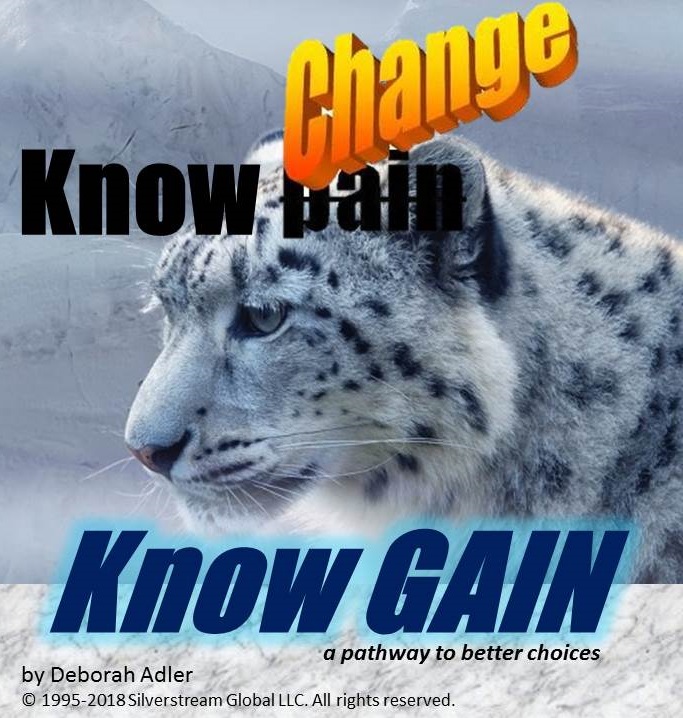
NO CHANGE NO GAIN

IT’S ALL ABOUT CHOICES!

by U’tana A’qua (Great Doe)

Please stop by again soon to read excerpts from this very personal account of one woman’s journey to recovery from addictions. This special E-Book also offers practical exercizes and practices to help ANYONE make better choices in life!

“Addictions” come in many forms – alcohol, drugs, food, sex, gambling, etc…..

DID YOU KNOW that scientific research into brain development and our bio-chemical processes has revealed that we can actually become addicted to certain chemical reactions in the brain and blood system that we have learned to stimulate with repetative, destructive behavior patterns?

Learn more about this in posts to come!

Bookmark and Share

Categories